
What Is Eco-Anxiety — and How to Cope
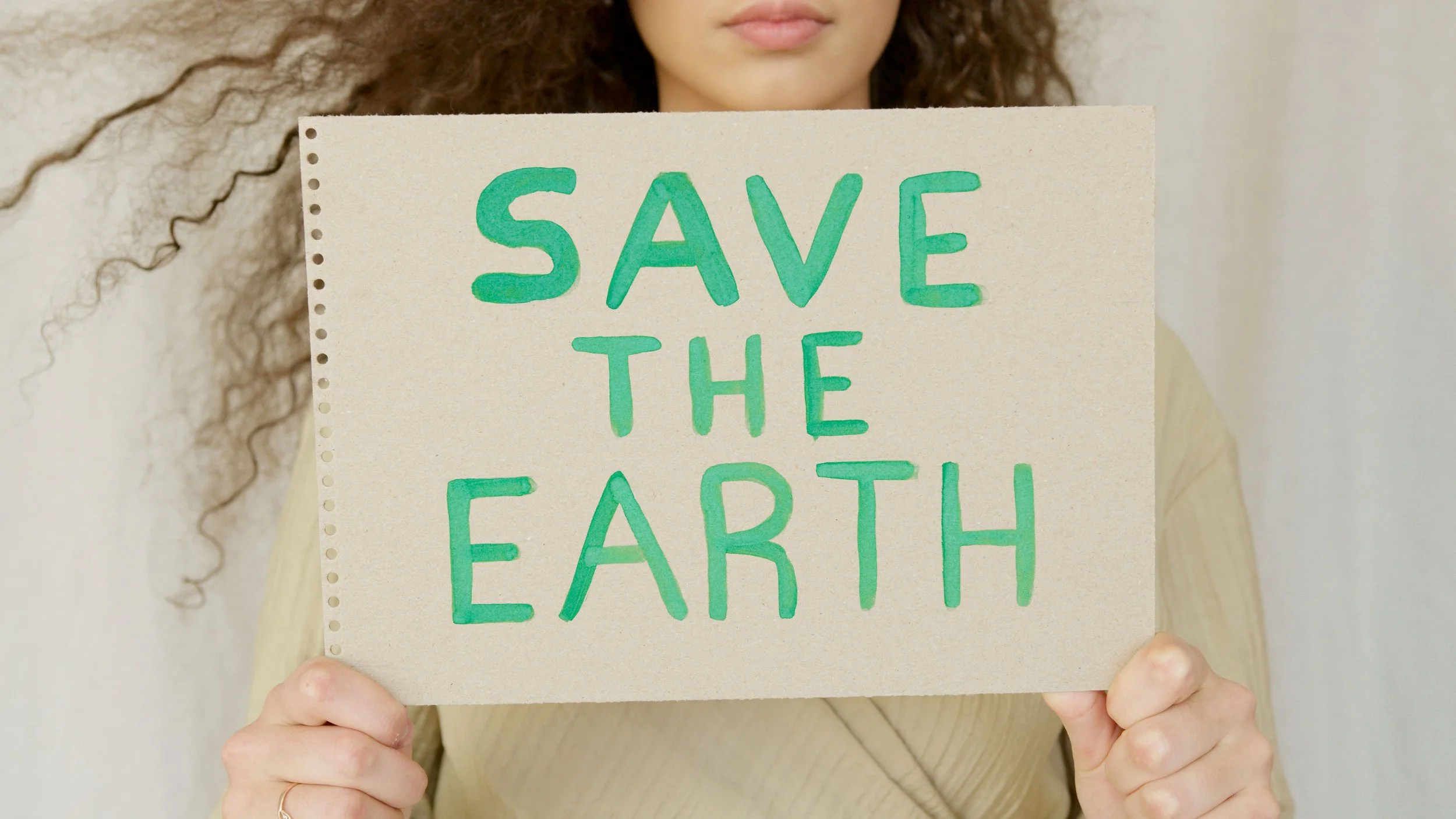
If reading the news about climate change leaves you feeling hopeless, overwhelmed, or quietly terrified about the future, you are not alone. And you are not overreacting.
What you are experiencing has a name: eco-anxiety. It’s a real and recognized psychological response to the climate crisis, and research suggests it is becoming more common around the world. Understanding what it is, and what actually helps, is a meaningful first step.
What Eco-Anxiety Actually Is
The American Psychological Association defines eco-anxiety as "the chronic fear of environmental cataclysm that comes from observing the seemingly irrevocable impact of climate change and the associated concern for one's future and that of next generations."
It is not a clinical diagnosis or a mental disorder. It does not appear in the DSM-5-TR, and is generally described by researchers and clinicians as a psychological response rather than a diagnosable condition. It is a rational emotional response to a real and growing threat. Feeling grief about species loss, rage at political inaction, guilt about your own carbon footprint, or helplessness when you watch extreme weather coverage. These are all forms eco-anxiety takes. And all of them are valid.
More than two-thirds of U.S. adults (68%) reported experiencing at least a little eco-anxiety, defined as anxiety or worry about climate change and its effects, according to the APA's Stress in America climate survey. Nearly half of young adults between 18 and 34 said they feel stress over climate change in their daily lives.
Globally, a 2021 survey of 10,000 young people across 10 countries found that almost 60% were either very or extremely worried about climate change (Hickman et al., The Lancet Planetary Health, 2021). More recent studies continue to find high levels of climate-related distress among young people.
Why Eco-Anxiety Is Getting Worse
If it feels like eco-anxiety is getting worse, you’re not imagining it. Several factors are driving it upward.
Extreme weather events are happening more frequently and more visibly. Wildfires in the American West, flooding across the Gulf Coast, record-breaking heat waves. These are no longer distant news stories for many people. Many residents across Florida, Colorado, Montana, and New Hampshire are experiencing climate-related changes such as stronger hurricanes, wildfire risk, changing snowpack, drought, flooding, or more frequent heat events.
A 2025 scoping review analyzing 202 articles identified four primary categories of coping strategies associated with eco-anxiety: problem avoidance, problem solving, emotional coping, and meaning- or efficacy-focused approaches.
The 24-hour news cycle and social media amplify climate coverage in ways that keep the nervous system in a state of low-grade alarm. Doomscrolling through coverage of wildfires, flooding, or policy failures can keep you in a stress response long after you have put your phone down. The more connected we are, the harder it is to step away from the weight of it.
How Eco-Anxiety Shows Up
One of the reasons eco-anxiety can be hard to recognize is that it does not always look like anxiety. It shows up in a lot of different ways.
Some people experience it as a persistent, low-level dread, a background hum of worry that does not have a specific trigger. Others feel it as grief: mourning places, species, or futures that feel lost or threatened. For some, it manifests as guilt or anger. For others, it looks like paralysis, feeling so overwhelmed by the scale of the problem that action feels pointless.
A systematic review published in Nature Mental Health in 2025 found that eco-anxiety in children and young people is influenced by social, political, and geographic factors, including media exposure, government distrust, and direct experience with environmental disaster.
It is also worth noting that eco-anxiety is not experienced equally. People in communities already facing the direct effects of climate change, including coastal communities in Florida, wildfire-prone areas in Colorado and Montana, and regions experiencing flooding in New Hampshire, tend to feel it more acutely than those who are watching it from a distance.
What Actually Helps
Managing eco-anxiety is not about minimizing the problem or pretending things are fine. It is about building the capacity to stay present and functional without being consumed by dread. These approaches have the most consistent support from both researchers and clinicians.
Limit your news consumption deliberately. There is a meaningful difference between staying informed and staying saturated. Setting a specific window for checking climate news (10 or 15 minutes, once a day) and closing it after that window is not avoidance. It is a practical boundary that protects your nervous system without cutting you off from information.
Take action, however small. Helplessness is one of the most corrosive parts of eco-anxiety. Taking any action, even a modest one, restores a sense of agency. Joining a local group, reducing one specific consumption habit, supporting an organization whose work you trust. The size of the action matters less than the act of doing something.
Spend time in nature. Research consistently shows that time in green or natural spaces lowers cortisol and reduces psychological distress (Twohig-Bennett and Jones, 2018). This does not require a trip to a national park. A walk around the block, time near water, or sitting outside in a green space all count. For people in Florida, Colorado, Montana, and New Hampshire, access to natural environments is one genuine advantage.
Find community. Isolation amplifies eco-anxiety. Shared concern with others, whether through a climate action group, an online community, or simply trusted friends who understand what you are carrying, transforms private dread into something more bearable. Many people find that sharing concerns with supportive others makes eco-anxiety feel more manageable.
Practice grounding techniques when things spike. Box breathing, body scanning, and other nervous system regulation tools do not solve climate change, but they interrupt the stress response when it gets out of hand. Having a few reliable tools matters when doomscrolling sends you into a spiral.
When Eco-Anxiety Becomes Something More
There is a difference between eco-anxiety and a clinical anxiety or depressive disorder, and it is worth knowing the line.
If your worry about the climate has become so persistent that it is interfering with your sleep, relationships, work, or daily functioning, to the point where it feels less like a background concern and more like something that has taken over, that is worth taking seriously. It does not mean you are weak or that your response to climate change is disproportionate. It means your nervous system needs support.
Researchers reviewing the relationship between climate change and mental health have noted a need for effective clinical interventions, and high-quality evidence to guide practice is still emerging, which is exactly why connecting with a psychiatric provider who takes this seriously matters.
At Mae Mental Wellness, we offer virtual psychiatric care for adults navigating anxiety, depression, and the emotional weight of living in an uncertain world. We are a psychiatric clinic, not a therapy practice. Our providers work with you on evaluation, diagnosis, and medication management when appropriate. We understand that mental health does not exist separately from the world you live in.
Mae Mental Wellness serves patients across Florida, Colorado, Montana, and New Hampshire. If eco-anxiety is affecting your daily life, we are here to help you find solid ground.
Visit MaeMentalWellness.com for more information, or to schedule your first consultation.
Sources:
American Psychological Association. Mental Health and Our Changing Climate, 2017/2021. https://www.apa.org/news/podcasts/speaking-of-psychology/eco-anxiety
American Psychological Association. Stress in America: Climate Survey. https://www.apa.org/monitor/2021/03/ce-climate-change
Hickman et al. Climate anxiety in children and young people and their beliefs about government responses to climate change. The Lancet Planetary Health, 2021.
https://www.thelancet.com/journals/lanplh/article/PIIS2542-5196(21)00278-3/fulltext
Nature Mental Health. Systematic Review of Social, Political, and Geographic Factors in Eco-Anxiety among Children and Young People, 2025. https://www.nature.com/articles/s44220-025-00550-z
Tandfonline. Towards a Unified Conceptual Framework of Eco-Anxiety, 2025. https://www.tandfonline.com/doi/full/10.1080/28324765.2025.2490524
PMC. The Relationship Between Climate Change and Mental Health: A Systematic Review, 2024.
Twohig-Bennett and Jones. The health benefits of the great outdoors: A systematic review and meta-analysis of greenspace exposure and health outcomes. Environmental Research, 2018.
Header image courtesy of Pexels.com.