
Meet Prescott Coe: Mae Mental Wellness's Newest Colorado Provider
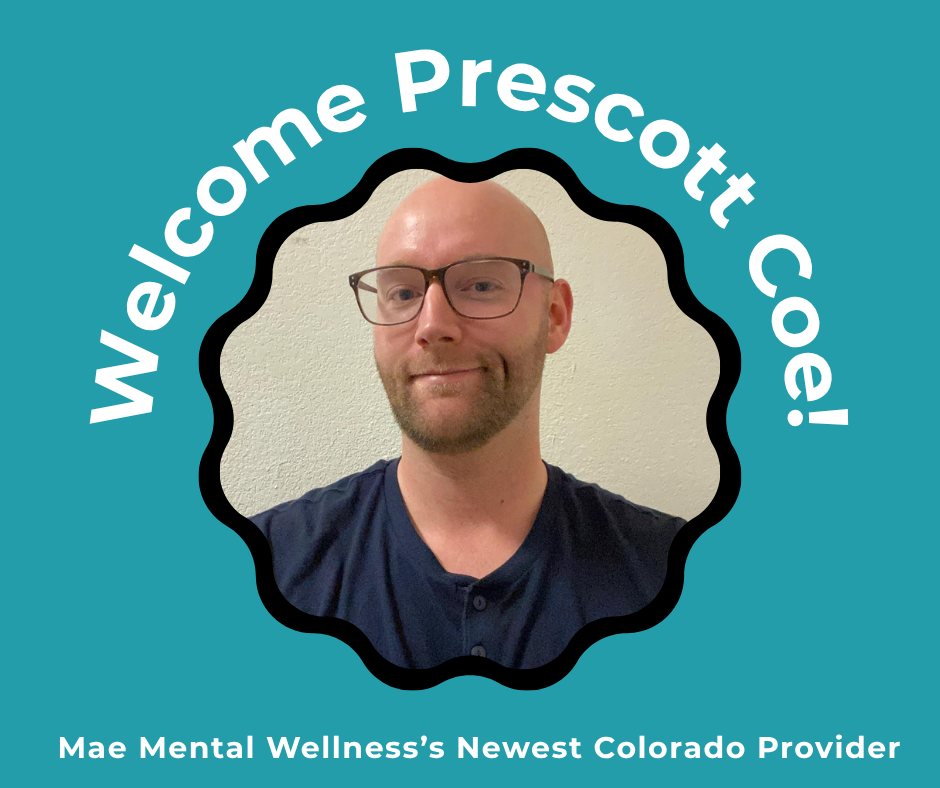
Mae Mental Wellness is growing its Colorado team, and we're glad to introduce Prescott Coe, a board-certified psychiatric mental health nurse practitioner who brings more than seven years of experience treating ADHD, trauma, and mood disorders. We asked Prescott a few questions about what brought him to psychiatric nursing, why he's passionate about Medicaid access, and what patient-led care actually looks like in his practice.
Q&A with Prescott Coe
You're the newest provider at Mae Mental Wellness, and we’re so glad to have you here. What drew you to psychiatric mental health nursing, and what led you here?
I was drawn to mental health nursing because many people in my family have mental health diagnoses, from bipolar disorder to schizophrenia to ADHD. Working in this field felt natural to me; it wasn't something I had to talk myself into.
What drew me to Mae Mental Wellness specifically is that, at a time when a lot of providers are working with Medicaid patients less and less, Mae hasn't shied away from them. I grew up poor and on Medicaid for my entire youth, so making sure this population has access to real psychiatric care is essential to me. To me, it’s personal.
You've spent more than seven years working with complex psychiatric needs. What first sparked your interest in ADHD, trauma, and mood disorders specifically?
What drew me to these three areas is how often they get confused with one another. ADHD, PTSD, and mood disorders have a lot of overlapping symptoms, and it's not uncommon for me to see someone who's been carrying a bipolar disorder diagnosis for years when ADHD is actually the more appropriate one. Getting that right changes the entire treatment plan, and it can be the difference between a patient feeling like their care finally makes sense or continuing to feel stuck.
Adult ADHD diagnoses have risen sharply in recent years, especially among women and late-diagnosed adults. What do you wish more people understood about how ADHD shows up differently across ages and genders?
People with inattentive ADHD are often missed entirely, because nobody has a problem with a quiet kid in class. Historically, women present more often with inattentive symptoms, so they don't get evaluated for ADHD until much later in life, if ever.
Life demands matter a lot here, too. A late-in-life diagnosis is often less about ADHD suddenly appearing and more about life getting harder until the coping strategies someone built earlier in life can't keep up anymore. Regardless of when someone gets diagnosed, the ADHD was always there. People adapt as best they can for as long as they can, until they can't.
Trauma-informed care is often called the new standard rather than a specialty. What does that approach actually look like in your first few sessions with a new client?
For me, it comes down to transparency. I don't push a patient toward topics they aren't ready to talk about, I give them options rather than a single prescribed path, and I explain things as clearly and efficiently as I can. Most importantly, I make sure the patient understands that at the end of the day, they're in control of what medications they will or won't take.
You work with rural populations who often face limited access to psychiatric care. What are the biggest barriers rural patients in Colorado run into, and how does telehealth change that picture?
The biggest barrier for rural patients seeking mental health care is usually access itself. That can be due to lack of reliable transportation or simply not having a provider anywhere nearby. Telehealth removes that barrier entirely. On top of that, many pharmacies can ship medications directly to patients, which makes the whole process more accessible from start to finish. For a lot of people in rural Colorado, virtual care is what makes consistent treatment possible.
"Patient-led" gets used a lot in mental health marketing. What does it actually mean in your practice, and how does it change the treatment plan?
For me, patient-led means we explore options together, as long as it's appropriate for the diagnosis and stays within general safety guidelines. I'm not going to hand someone a treatment plan they had no part in building. There isn't much benefit in prescribing medication a patient won't actually take. If it's not something they trust or feel good about, it's not going to work, no matter how clinically sound it is on paper.
Book with Prescott Coe at Mae Mental Wellness
Prescott Coe is now accepting new patients across Colorado through Mae Mental Wellness's secure virtual visits. If you're looking for a psychiatric nurse practitioner who specializes in ADHD, trauma, and mood disorders, book an appointment today.