
How Yoga, Tai Chi, and Mindful Movement Support Your Mental Health
Elle Woods once said, “Exercise gives you endorphins, and endorphins make you happy!” While we won’t finish the rest of that movie quote (if you know, you know), that mood lift after a walk or yoga in the park isn’t just your imagination. It's actually your brain chemistry working in your favor, and you don't need to be an athlete to feel the benefits of movement. Whether you're managing anxiety and depression, or trying to take better care of your mental health, intentional movement can play a meaningful role in your overall wellbeing.
The Brain-Body Connection: What's Actually Happening
Even when you exercise gently, your brain responds in powerful ways. Physical activity lowers levels of stress hormones like cortisol and adrenaline, while simultaneously triggering the release of endorphins, the body's natural mood elevators. But wait, there’s more!
According to Harvard Health, yoga in particular has been shown to elevate levels of gamma-aminobutyric acid (GABA), a brain chemical associated with improved mood and decreased anxiety. Low GABA levels are commonly linked to anxiety disorders and depression; two of the most prevalent mental health conditions in the United States.
Meditation practices, often woven into yoga and tai chi, also reduce activity in the limbic system, the part of the brain responsible for emotional reactions. Over time, this leads to a more regulated response to everyday stressors.
Exercise also promotes neuroplasticity, which is the brain's ability to form new connections. Research shows that yoga strengthens parts of the brain involved in memory, attention, and emotional regulation. When you strength train your body, you’re strength training your mind, too.
Yoga: Ancient Practice, Modern Mental Health Benefits
Yoga has been practiced for thousands of years, and modern science is now confirming what practitioners have known: it works. A 2024 systematic review published in Depression and Anxiety (Wiley) found that yoga can reduce symptoms of depressive disorders comparable to approved treatments, without the side effects often associated with medications.
Regular yoga practice has also been shown to increase serotonin levels, the neurotransmitter most closely associated with feelings of happiness. Yoga can help improve sleep quality, sharpen focus and increase cognitive function.
For people dealing with anxiety disorders, the breathwork component of yoga is especially powerful. Research suggests that controlled breathing directly interrupts the physiological anxiety response by regulating the nervous system.
WebMD reports that 86% of Americans who practice yoga cite stress relief as a primary reason. Yoga's combination of physical movement, breath awareness, and mental focus makes it one of the most comprehensive mind-body wellness tools available.
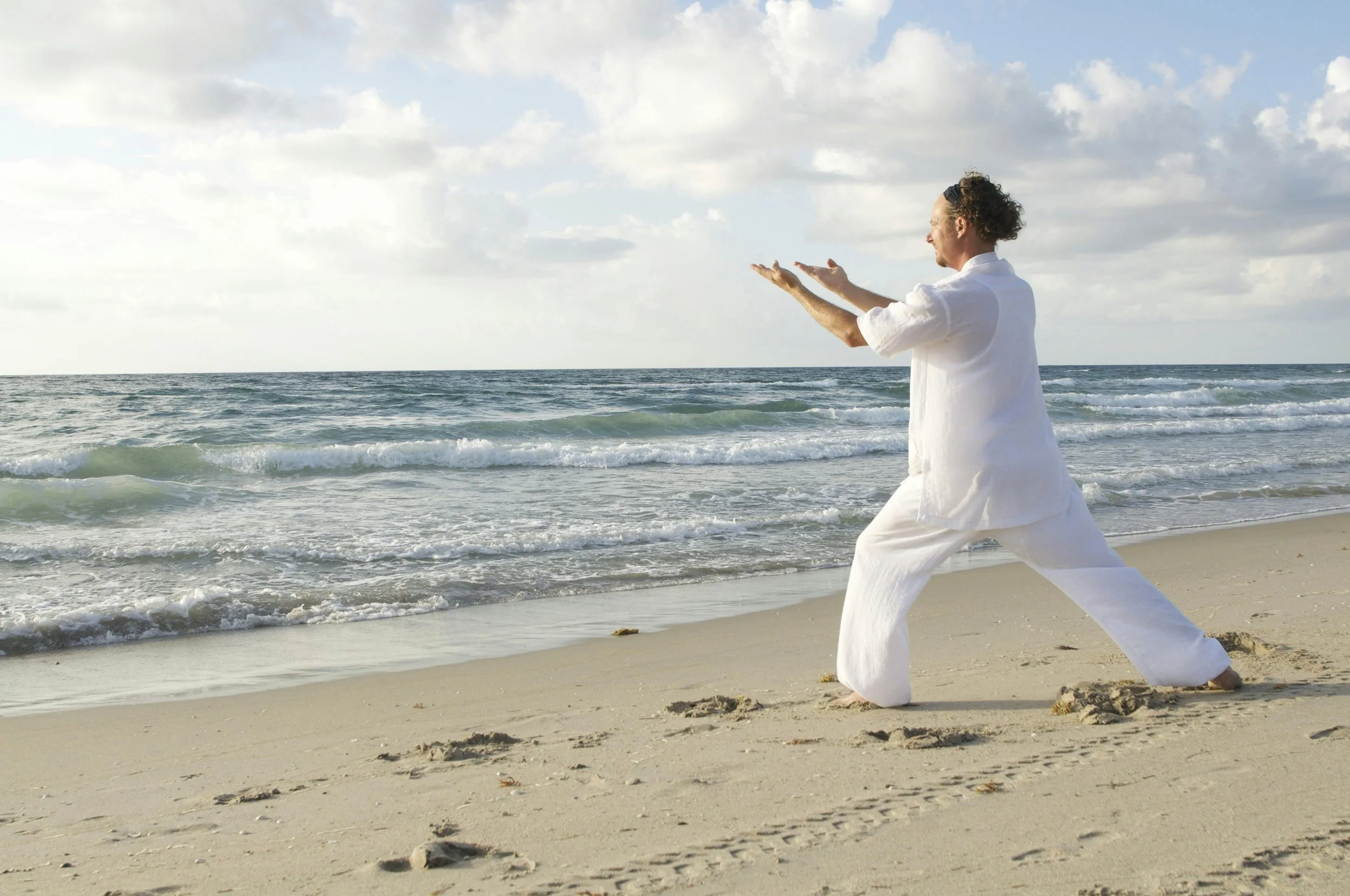
Tai Chi: Slow Movement, Serious Mental Health Impact
Tai chi looks almost meditative in its slow, flowing movements, but its impact on mental health is anything but subtle. A 2026 narrative review published in Frontiers in Psychology concluded that tai chi can alleviate symptoms of anxiety and depression, supports emotional balance, and promotes psychological resilience by cultivating mindfulness and self-awareness.
Additionally, a 2024 randomized controlled trial in Frontiers in Psychology found that participants who practiced mindfulness-enhanced Tai Chi Chuan (MTCC) showed meaningful improvements in both mental and physical health outcomes compared to those who practiced traditional tai chi without the mindfulness component. This reinforces the idea that the intentional, present-moment quality of the practice is a key driver of its benefits, not just the physical movement alone.
Tai chi is also very accessible. It's low-impact and doesn't require special equipment or a high fitness level, making it an excellent option for people of all ages, including older adults and those managing chronic health conditions. Research cited in Medicine (2025) found it to be particularly effective for reducing depression symptoms in older populations.
Qigong: The Quieter Cousin With Real Results
Qigong is a practice that is lesser known in Western culture, but combines slow movement, breathwork, and meditation. Research highlighted in a 2025 PeerJ meta-analysis found that qigong meaningfully reduces stress and anxiety, with effects similar to those seen with yoga and tai chi. Its gentle, repetitive movements make it especially easy to integrate into a daily routine, even for those with limited mobility or energy.
Like tai chi, qigong activates the parasympathetic nervous system. This directly counteracts the chronic fight-or-flight activation that underlies so many anxiety and stress-related conditions. It's a powerful reminder that healing doesn't always have to be intense to be effective.
How to Get Started: Practical Tips
Consistency matters far more than intensity or skill level, and it doesn’t have to be perfect. Here are some grounded starting points to introduce yoga, tai chi, or qigong into your routine:
• Start with 10-20 minutes. Even short sessions of yoga, tai chi, or qigong can shift your mood and nervous system state. You can build duration over time.
• Use free resources. YouTube is full of beginner-friendly yoga, tai chi, and qigong classes. No gym membership or special equipment needed.
• Focus on your breath and the movement itself rather than letting your mind wander. The mental health benefits are amplified when you stay present during your practice.
• Try it 3-4 times per week. Research cited in a Frontiers editorial (NIH/PMC, 2025) found that practicing yoga 3-4 times per week was associated with significant reductions in stress and psychological distress.
• Be patient with yourself. Mental health benefits often build gradually over several weeks of consistent practice.
Movement As Part of a Larger Wellness Plan
Mindful movement works best as part of a comprehensive approach to mental wellness. For people dealing with moderate to severe anxiety, depression, or other psychiatric conditions, exercise and mindfulness practices can complement — but not replace — psychiatric evaluation and medication management when needed. Many people find that combining regular movement with the right psychiatric support leads to the most meaningful improvements in their mental health.
Ready to take the next step in your mental wellness journey? Mae Mental Wellness offers virtual psychiatric services and medication management to support your overall wellbeing from the comfort of your home, or wherever you need support. Whether you're just starting out or looking for more comprehensive psychiatric support, our team is here for you. Reach out today at MaeMentalWellness.com to get started.
Sources:
Harvard Health. (2024). Yoga for better mental health. https://www.health.harvard.edu/staying-healthy/yoga-for-better-mental-health
Moosburner, A. et al. (2024). Yoga for Depressive Disorder: A Systematic Review and Meta-Analysis. Depression and Anxiety. https://pmc.ncbi.nlm.nih.gov/articles/PMC11919030/
Qu, P. et al. (2024). The effects of mindfulness enhanced Tai Chi Chuan training on mental and physical health among beginners. Frontiers in Psychology, 15, 1381009. https://www.frontiersin.org/journals/psychology/articles/10.3389/fpsyg.2024.1381009/full
Frontiers in Psychology (2026). Tai chi in mental health interventions: a narrative review comparing its role with pharmacotherapy and psychotherapy. https://www.frontiersin.org/journals/psychology/articles/10.3389/fpsyg.2026.1738619/full
PeerJ (2025). Integrating mindfulness and physical activity: a meta-analysis of mindful movement interventions for symptoms of anxiety and depression. https://peerj.com/articles/19640/
NIH/PMC (2025). Editorial: Mindfulness, mind-body exercises, and health promotion. Frontiers. https://www.ncbi.nlm.nih.gov/pmc/articles/PMC11832519/
Medicine (2025). Exploring the benefits of traditional Chinese exercises (Tai Chi and Qigong) on anxiety and depression of older adults. https://pmc.ncbi.nlm.nih.gov/articles/PMC11936652/
WebMD. Benefits of Yoga for Mental Health. https://www.webmd.com/balance/benefits-of-yoga-for-mental-health
Header image courtesy of Pexels.